
A stump you’re not ready to grind down can still earn its keep. Turn it into the most talked-about planter in your neighborhood. A stump planter is a creative way to transform an eyesore into a beautiful focal point that’ll have your neighbors asking how you did it. Here’s the step-by-step process.
What You’ll Need
- Mattock (or hammer and chisel for smaller stumps)
- Drill with a 1/2-inch auger-style bit
- Safety glasses and work gloves
- Gravel or broken pottery
- Potting soil and compost mix
- Your choice of flowers
Step 1: Hollow Out the Center
Sharpen the pointed end of your mattock and put on your safety glasses. Start chipping away at the center of the stump using the narrow, pointed end. As the hole deepens and widens, switch to the broader end of the mattock and work outward toward the edges. Your goal is a planting hole about 8 inches deep with a 3-inch border around the rim.
The wood will be softer if the stump has been sitting for a while, older stumps that have started to decay are actually easier to hollow out than fresh ones.
Step 2: Drill Drainage Holes
This step is critical, without drainage, your planter becomes a swimming pool and the flowers will rot. Use a 1/2-inch drill bit long enough to penetrate through the side of the stump into the planting hole. Drill four drainage holes near the bottom of the planting cavity, angling the bit slightly upward as you drill so water flows downhill and out.
Step 3: Fill and Plant
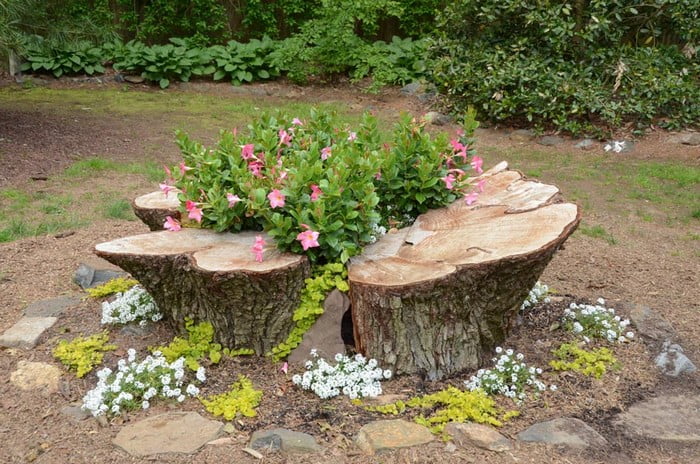
Layer in about an inch of gravel or broken pottery at the bottom to keep the drainage holes from clogging. Fill the rest with a 50/50 mix of potting soil and compost. Since the tree is no longer living, it won’t compete for water and nutrients, your flowers will actually thrive in this setup.
For the best visual impact, use three types of plants: a tall centerpiece (like a small ornamental grass or upright flower), mid-height fillers (like impatiens or petunias), and trailing spillers along the edges (like sweet potato vine or creeping jenny). Tuck a few extra plants around the base of the stump to tie the whole arrangement together.
Best Flowers for Stump Planters
Choose plants that match your stump’s sun exposure:
- Full sun: Petunias, marigolds, geraniums, zinnias, sweet potato vine
- Partial shade: Impatiens, begonias, coleus, ferns
- Full shade: Hostas, ferns, coral bells, creeping jenny
How Long Will a Stump Planter Last?
A hardwood stump planter can last 5–10 years or more. Softwood stumps will decay faster, typically 3–5 years. As the wood breaks down, it actually adds nutrients to your planting mix. When the stump eventually decays too far to hold soil, you can have it ground down at that point.
For more ideas, check out our post on creative ways to use a large tree stump. And if you’d rather skip the DIY and just get the stump out of there, StumpBusters LLC can grind it out and haul the pile away. See what it costs.