

The Tulip Magnolia Tree is a marvelous tree planted for its ornamental value. Its scientific name is Magnolia Soulangiana. It’s often also called the Saucer Magnolia due to the saucer shape of its flowers. There are several varieties, but they are all very spectacular and similar in growth characteristics. This tree is deciduous, meaning that it loses its leaves and hibernates during the winter, with new buds of leaves and flowers forming each spring.
This tree prefers southern and warm climates that receive plenty of rainfall each year. In many southern yards, the tulip magnolia stands as an anchor plant and centerpiece of the landscape. The reason that this tree is not found in more northern climates is that it flowers early in the spring before the leaves unfurl. These early and beautiful flowers are very susceptible to frost. A late frost will kill the flowers, but not necessarily the tree, but the flowers are the main reason for wanting this tree in your yard in the first place.
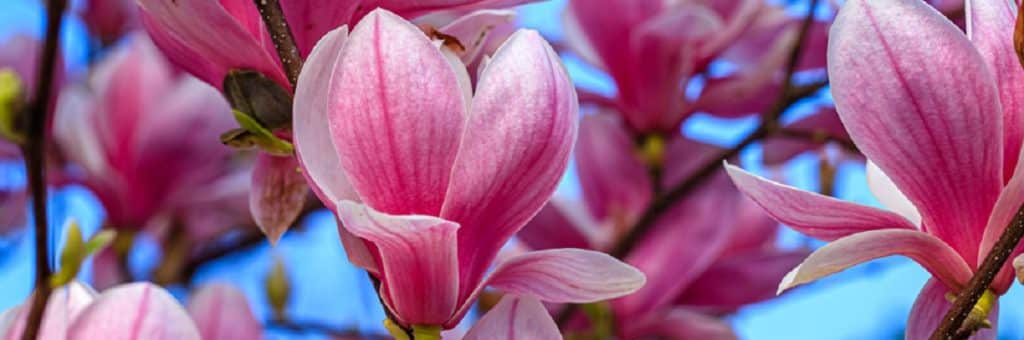
The blossoms are where this tree shines
The blossoms of the Tulip Magnolia are four to eight inches long or even more. The flowers are tulip-shaped and that is where the tree gets its name. The flowers are showy and the petals will be light pink to purple. The leaves are also very large ranging in size from four to six inches long. They form in a bud and then unfurl after the tree has blossomed at nearly its full size. The leaves are green on top and pale and fuzzy underneath. The flower buds are fairly large, whereas the leaf buds will be smaller and fuzzy.
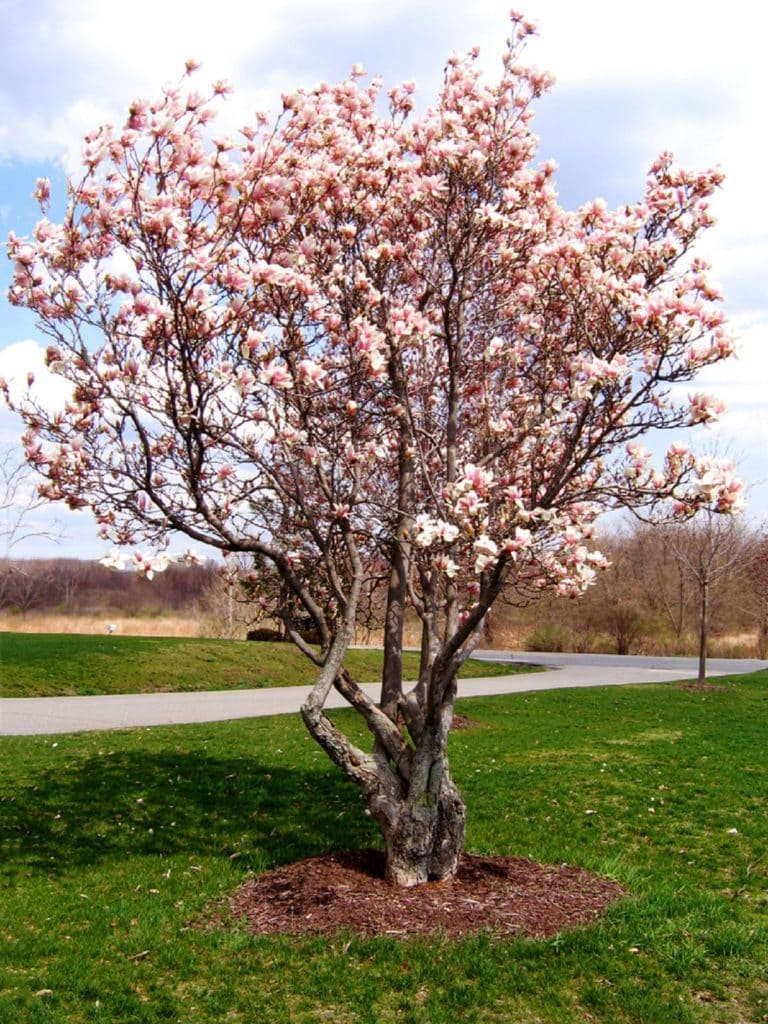
The blossoms of the Tulip Magnolia are four to eight inches long or even more. The flowers are tulip-shaped and that is where the tree gets its name. The flowers are showy and the petals will be light pink to purple. The leaves are also very large ranging in size from four to six inches long. They form in a bud and then unfurl after the tree has blossomed at nearly its full size. The leaves are green on top and pale and fuzzy underneath. The flower buds are fairly large, whereas the leaf buds will be smaller and fuzzy.
Not a difficult tree to maintain
The Tulip Magnolia tree has multiple trunks and low branches. The low branches and multiple trunks make this tree a favorite for kids to climb. The bark is fairly smooth and has a mottled gray color to it. It grows to a height of about 20 to 30 feet. Experts advise homeowners to trim the tree to keep them under 20 feet. Trimming and pruning allow you to shape the tree as well as better manage its growth before it becomes overgrown. It also will keep your kids from climbing to even greater heights.
The tree will grow at a moderate rate and it likes moist soil that drains well, where its roots can grow deep. It can tolerate moderately acidic soil and fertilizer is rarely needed. It also prefers to grow in a location with full sun in hardiness zones 4-9. The tree’s roots are fleshy and grow deep in search of water. This makes the tree difficult to successfully transplant.
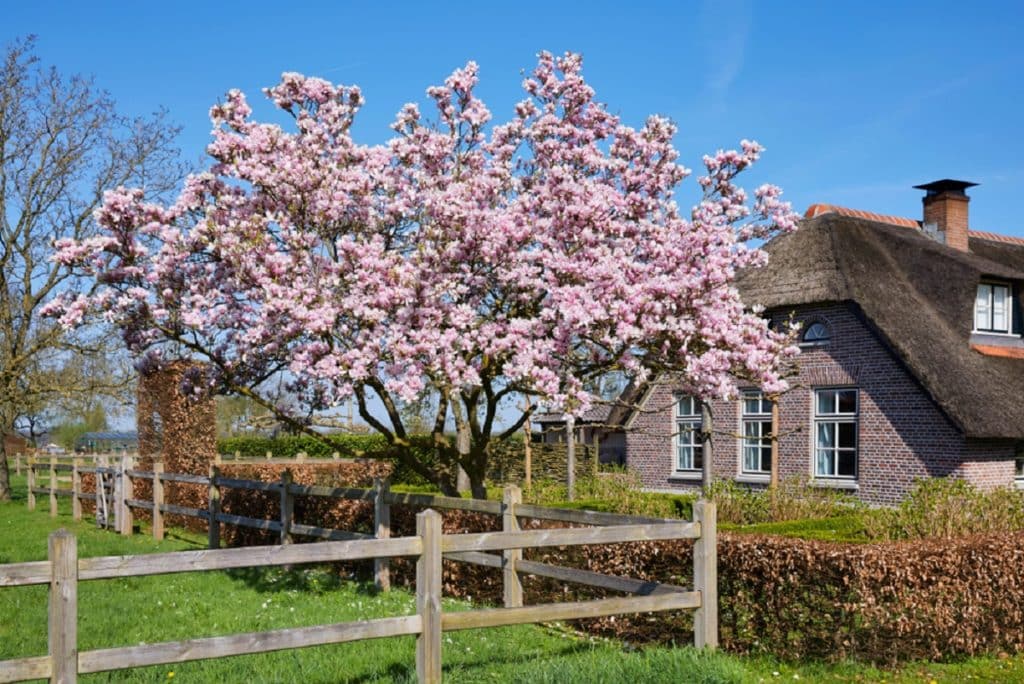
The tree has no autumn color to speak of, but the vivid colors of the spring blossoms more than make up for that. It bears a non-edible fruit that is shaped a little like a cone. The fruit matures in late summer. During that time, even though the fruit is not something you can enjoy, you can enjoy the shade. The leaves are ample and large which will provide you with plentiful shade to enjoy your days.
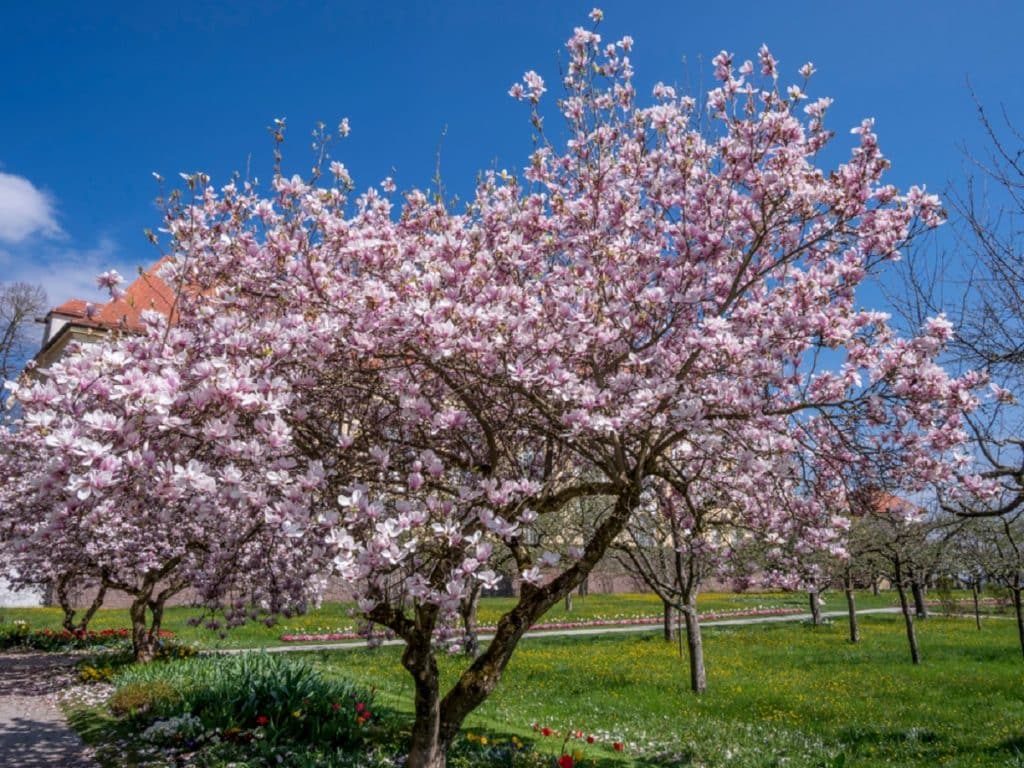
Where to plant?
It’s best to plant this tree as part of a total landscaping plan. It should not be planted in an area where other trees or plants will take away its glory. This tree begs to be fully visible to show off its colorful flowers and large leaves. It should be planned to be a centerpiece or to be placed at a fence corner. Also, consider that this tree will offer shade below it. You can use it to shade a less sun-tolerant flower garden that will complement the stateliness of the tree. You could also use the shade as a place to sit and enjoy your landscape. StumpBusters LLC















My small tulip magnolia is in a sunny area. Its leaves are turning brown and the top 2 feet of the tree have no leaves at all. The are small branches coming out near the bottom of the trunk.
We lost our other very old tulip magnolia due to drought and freeze. I am debating about whether to to have the small tree removed. It is unsightly. What is your advice?
It sounds like your tulip magnolia is under significant stress, and unfortunately, the symptoms you’re seeing—browning leaves, dieback at the top, and suckering near the base—are often signs of deeper issues. Here’s what might be going on and how to decide whether to remove it:
🌿 What the Symptoms Suggest
• Leaf Browning: This is commonly caused by leaf scorch, often due to drought stress, intense sun, or poor watering practices. It can also be a sign of nutrient deficiency or fungal disease like verticillium wilt.
• Top Dieback: When the upper part of the tree loses leaves and fails to grow, it often indicates root damage, disease, or severe environmental stress. Verticillium wilt is a serious fungal disease that affects water transport and can cause this kind of dieback.
• Suckers at the Base: These small branches are often a sign the tree is trying to survive by redirecting energy to its base. It’s a stress response and usually means the upper structure is failing.
🧪 What You Can Do (If You Want to Try Saving It)
• Water deeply and consistently, especially during dry spells. Magnolias prefer moist but well-drained soil.
• Mulch around the base to retain moisture and protect roots.
• Prune dead or diseased branches to help the tree focus its energy on healthy growth.
• Soil test: Check for nutrient deficiencies and adjust with a balanced fertilizer.
• Inspect for pests or fungal signs and treat accordingly.
🪓 When Removal Might Be the Best Option
• If the tree has verticillium wilt, it’s likely fatal for young trees and can spread to other plants.
• If the top dieback is extensive and the tree has lost its shape and vitality, recovery is unlikely.
• If the tree is unsightly and not improving, and you’ve already lost another magnolia to similar conditions, it may be better to remove it and start fresh with a more resilient species or a better planting strategy.
🌱 Final Thought
If you’re emotionally attached or want to give it one last chance, a few months of focused care might show improvement. But if aesthetics, disease risk, or practicality are your priorities, removal is a reasonable and proactive choice.
Would you like help choosing a replacement tree that’s more drought- and freeze-tolerant for your area?