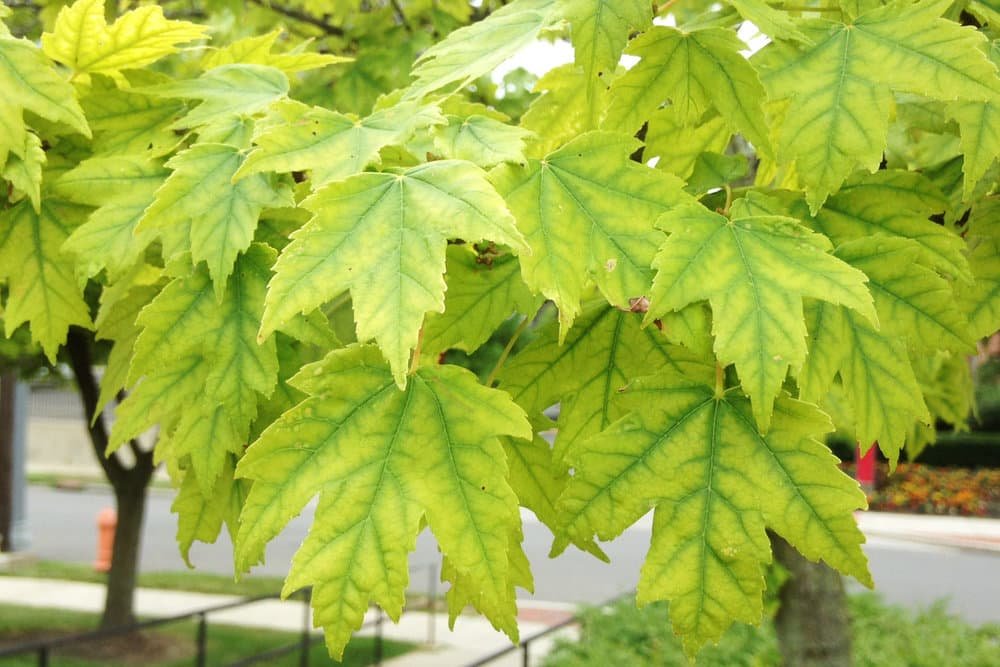
If your tree’s leaves are turning pale green, yellow, or even white while the veins stay darker, you’re likely looking at chlorosis. It’s one of the most common nutrient problems in landscape trees and shrubs, and if left untreated, it can seriously weaken or kill an otherwise healthy tree. Here’s what causes it, how to identify the type you’re dealing with, and what to do about it.
What Does Chlorosis Look Like?
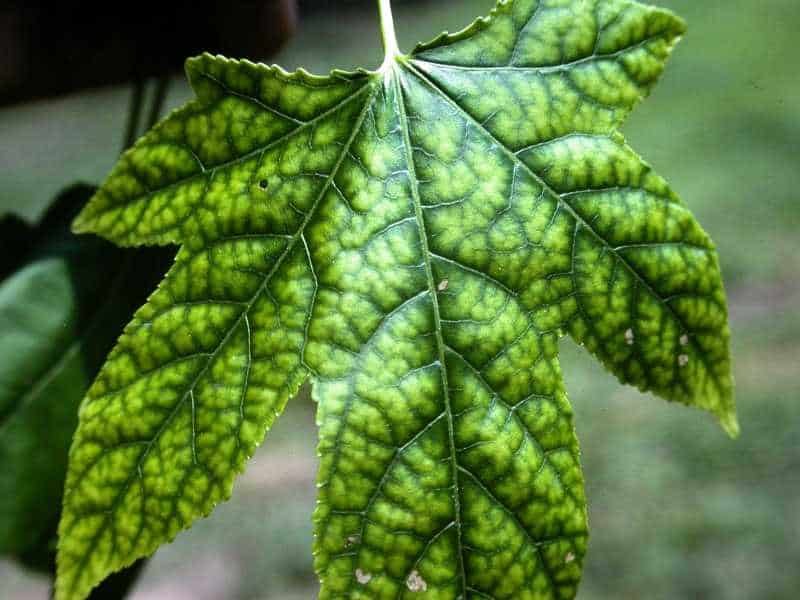
Chlorotic leaves lose their normal green color and turn pale green to yellow. In severe cases, leaves may turn almost white, develop brown edges, and eventually drop off the tree. The key diagnostic sign is that the leaf tissue yellows while the veins often remain green, creating a distinct striped or netted pattern.
How to Tell What Type of Chlorosis You Have
Where the yellowing starts tells you which nutrient is missing:
- Iron chlorosis (most common), starts on the younger, outer leaves and works inward toward older growth. This is the type you’ll see most often in Central PA landscapes.
- Manganese or zinc chlorosis: starts on the older, inner leaves and works outward toward newer growth. Less common but follows the opposite pattern.
What Causes Chlorosis?
Iron is the most critical element here because it manages metabolism, respiration, and is essential for producing chlorophyll, the pigment that makes leaves green and enables photosynthesis. Without enough iron, the tree literally can’t produce its own food.
The tricky part is that iron chlorosis usually isn’t caused by a lack of iron in the soil. It’s caused by high soil pH (above 6.5) that locks the iron up so the roots can’t absorb it. Iron can only be taken up by roots when soil pH is between 5.0 and 6.5. In alkaline soils, other elements like calcium, copper, and phosphorus interfere with iron absorption.
Trees commonly affected in our area include Red Maples, Pin Oaks, River Birch, Sweetgum, and Blueberry bushes. If you’re seeing chlorosis on a Maple or Oak, soil pH is almost certainly the culprit.
How to Treat Chlorosis
The approach depends on severity:
For Mild Cases
- Proper watering: overwatering saturates the root zone and makes nutrient uptake worse. Water deeply but infrequently rather than frequent shallow soaking.
- Mulching: a 2–3 inch layer of organic mulch around the tree (not touching the trunk) helps acidify the soil naturally over time as it decomposes.
- Soil acidifiers: elemental sulfur or iron sulfate applied to the soil can gradually lower pH and free up iron for absorption.
For Moderate to Severe Cases
- Deep root fertilization: a slow-release fertilizer combined with a bio-stimulant and mycorrhizae injected into the root zone. Bio-stimulants contain vitamins and hormones that aid recovery. Mycorrhizae are naturally occurring fungi that attach to roots and dramatically increase water and nutrient uptake.
- Trunk injection: micronutrients can be injected directly into the tree trunk for fast results when the tree is in serious decline.
- Pruning: removing the most severely affected branches helps the tree focus its limited energy on healthy growth. A good pruning approach can make a real difference in recovery speed.
Prevention Is Easier Than Treatment
The best approach is to plant trees suited to your soil conditions. Before planting, get a soil pH test (available through your county extension office for a few dollars). If your soil runs alkaline, choose tree species that tolerate higher pH rather than fighting the soil chemistry for years. Learn more about what defines a healthy tree and how to spot problems early.















Pingback: TREE STUMPS : DANGER IN YOUR YARD - StumpBustersLLC
Pingback: Spider Mites - StumpBustersLLC
Pingback: Eastern White Pine: Benefits, Drawbacks, and Care - StumpBusters LLC