
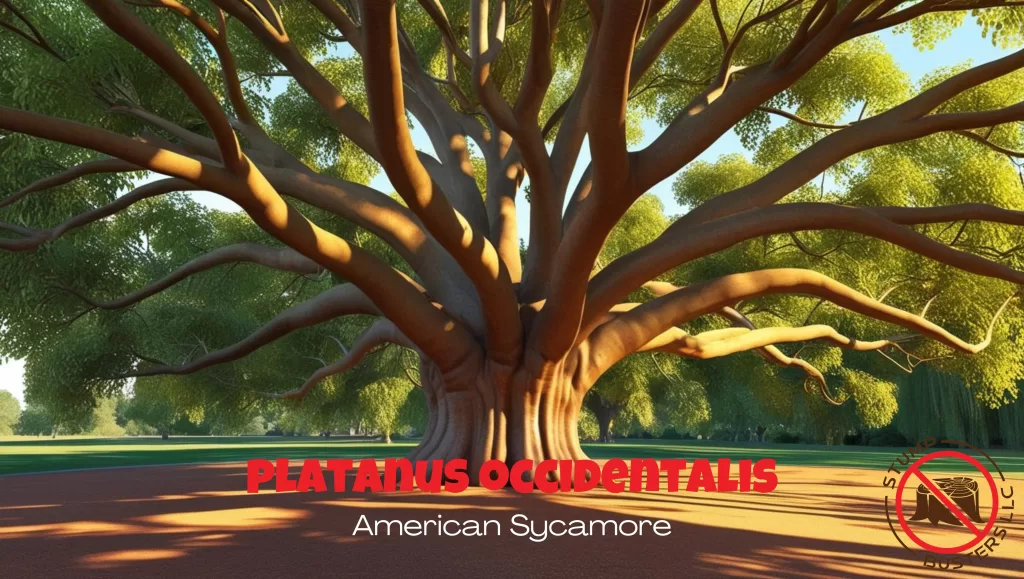
The American sycamore (Platanus occidentalis) is the heaviest-built tree in the eastern forest: the thickest trunks, some of the oldest ages, and bark you can identify from a moving car. It grows wild along every creek in Central Pennsylvania.
Here are five facts worth knowing about it, plus notes on recognizing one, what it does for a riverbank, and how to care for one on your property.
5 Facts About Platanus occidentalis
1. Its flowers hide in plain sight.
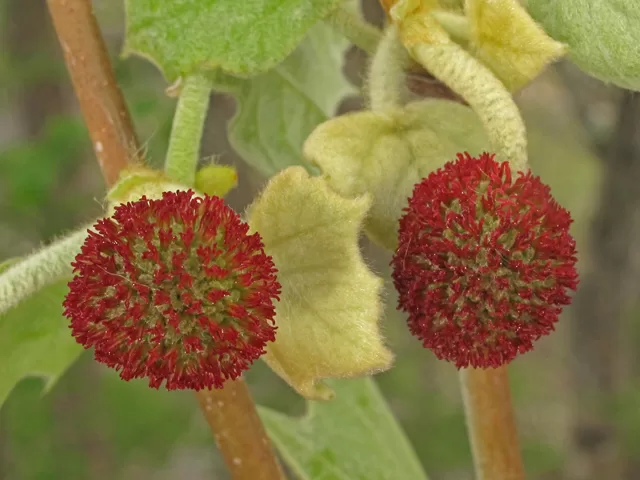
Sycamores are monoecious: each tree carries separate male and female flowers, packed into small ball-shaped clusters that appear with the leaves in spring. The female balls become the familiar “buttonballs” that hang on bare branches all winter, then shatter in late winter into hundreds of fluffy wind-carried seeds.
2. It is built for hard places.
A floodplain native, the sycamore handles standing water, compacted soil, and city pollution better than most large trees, and still grows 2 feet or more a year. That toughness is why its hybrid offspring, the London planetree, became the default street tree of the world’s big cities.
3. It grows tall.
A typical mature sycamore runs 75 to 100 feet on a single massive trunk, and historical accounts describe trees pushing 150. In winter you can spot them from a half mile off: the upper limbs are bone white against the sky, a color no other big eastern tree shows.
4. It lives for centuries.
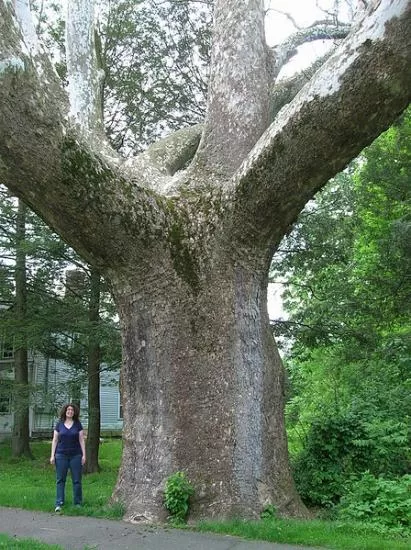
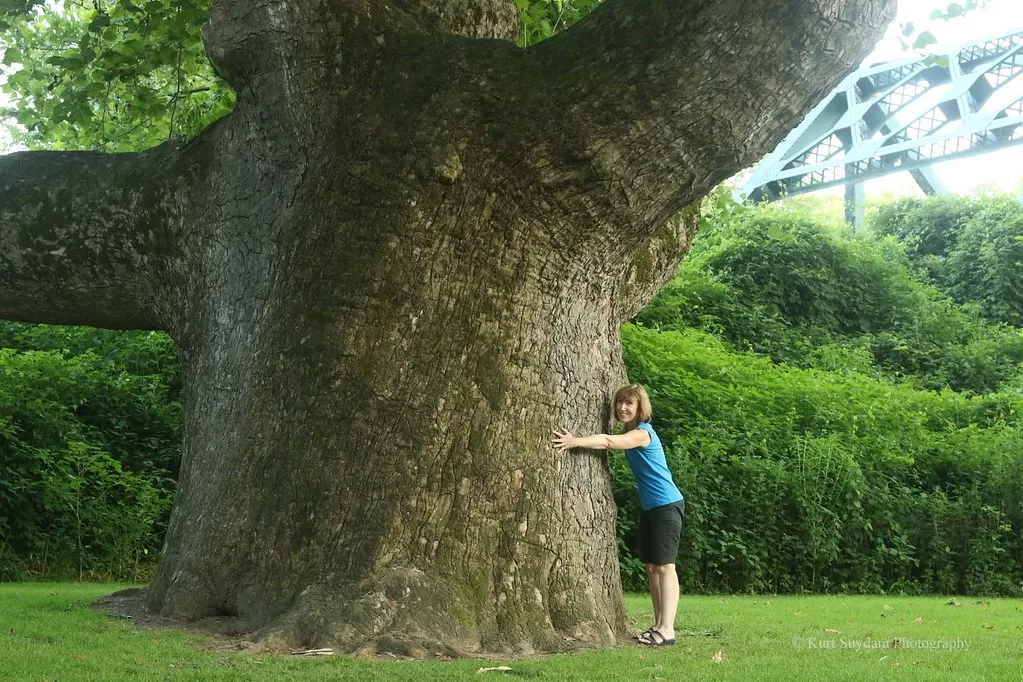
Two hundred years is routine for a sycamore, and 500 to 600 is possible on a good site. The oldest trunks usually go hollow while the tree lives on, and those hollows are legendary: frontier accounts tell of families sheltering in them and farmers stabling livestock inside. Today they den raccoons, owls, and wood ducks instead.
5. No eastern hardwood grows a thicker trunk.
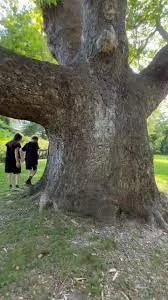
The American sycamore holds the girth record among native hardwoods east of the Rockies. Historical giants measured nearly 15 feet across the trunk, and even ordinary old ones develop the kind of diameter that makes people stop and put a hand on the bark.
How to Recognize One
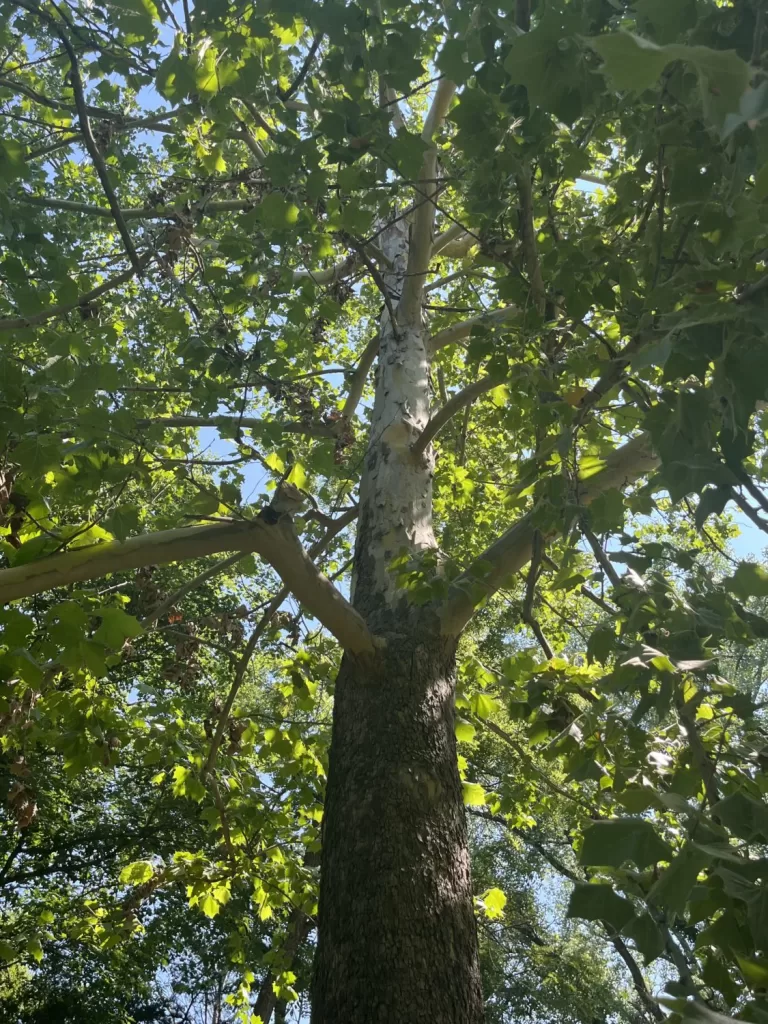
The bark gives it away. Sycamore trunks wear a camouflage pattern of gray, green, cream, and brown patches where the rigid outer bark flakes off, because the bark cannot stretch to keep up with the fast-thickening trunk. Higher up, the limbs go smooth and white. The leaves are broad and maple-shaped, 4 to 10 inches across, and the inch-wide buttonballs dangling on long stems confirm the ID at any time of year.
What It Does for a Riverbank
- Holds the bank: Sycamore root systems knit streambanks together, which is why the biggest ones in our area stand along creeks that have shifted around them for a century.
- Cools the water: The broad canopy shades streams, and cooler water holds more oxygen for fish and the insects they eat.
- Houses wildlife: Cavity nesters from chickadees to barred owls depend on old hollow sycamores, and the winter seed balls feed finches and squirrels.
Diseases to Know
- Anthracnose: The big one. In cool wet springs this fungus browns the first flush of leaves and drops them, and by June an infected sycamore can look half dead. It almost never is. The tree pushes a second set of leaves by midsummer, and healthy sycamores repeat this cycle for decades without serious harm.
- Powdery mildew: White dusty patches on leaves in humid summers. Cosmetic on a big tree; improve air flow and ignore it.
- Bacterial leaf scorch: The one to take seriously. Leaves brown from the edges in late summer, a little more of the crown each year, and there is no cure. A certified arborist can confirm it with a lab test if you see the pattern repeating.
Soil and Siting
- Soil: Deep, moist loam is ideal, pH roughly 6.0-7.5, though sycamores tolerate far worse, including seasonal flooding.
- Room: This is a 100-foot tree with a canopy nearly as wide. Keep it 40 feet or more from buildings, sewer laterals, and pavement its roots could lift.
Care and Pruning
- Water: Deep weekly watering the first two growing seasons; after that a sycamore fends for itself except in severe drought.
- Pruning: Remove dead or damaged branches while the tree is young enough to reach, and prune in late winter dormancy rather than fall, when fresh cuts invite disease. Once the tree is beyond ladder height, overhead work belongs to a certified arborist.
Thinking about actually planting one, or living with a giant already in the yard? Our companion piece, a closer look at the sycamore, covers the bark, the leaf litter, and the honest tradeoffs of sharing a property with this tree.















Great article. Had one in my parents front yard.
what ?
huge trees, certainly not the best choice for someones front yard