
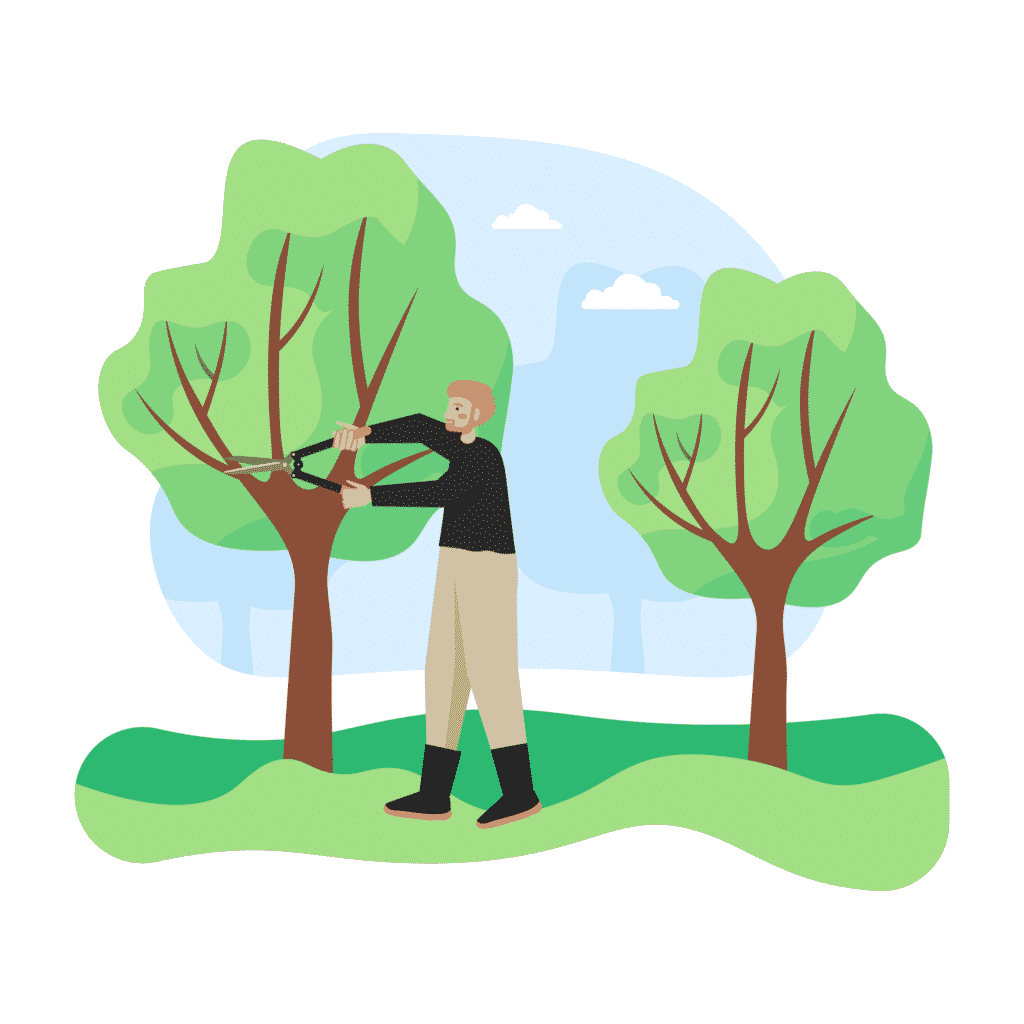
Pruning is one of the most important things you can do for your trees, and the good news is that it doesn’t have to be complicated. Whether you’re shaping a young tree or maintaining a mature one, the basics are the same. Here’s a practical guide to get you started.
When to Prune
Timing matters, and it depends on what you’re trying to accomplish:
- Late winter (February–March) — the best time for major structural pruning. The tree is dormant, the branch structure is clearly visible, and spring growth will heal the cuts quickly. This is when we recommend doing the heavy work. See our winter pruning tips for more detail.
- Early spring (March–April) — great for shaping and encouraging new growth. Our spring pruning guide covers this timing specifically.
- Summer — limit to light trimming only. Cutting too much during active growth season can stress the tree and stunt both branch and fruit development.
- Dead or broken branches — remove these any time you spot them, regardless of season.
What to Look For Before You Start
Before making a single cut, walk around the tree and view it from several angles. Identify what needs to go:
- Dead, broken, or diseased branches — always remove these first
- Crossing branches — limbs that rub against each other create wounds that invite disease
- Branches growing straight up (water sprouts) or straight down — these are unproductive
- Narrow-angle branches — limbs growing at tight angles to the trunk form weak joints that can split in storms
- Low-hanging branches — if they obstruct walking, mowing, or visibility
- Crowded interior branches — thinning the center allows light and air to reach all parts of the tree
The Three Types of Pruning Cuts
Understanding these three approaches will cover most residential pruning situations:
1. Crown Raising
Removing lower branches to provide clearance underneath the tree — for walking, mowing, visibility, or vehicle access. This is the most common reason homeowners prune.
2. Crown Thinning
Selectively removing branches throughout the canopy to increase light penetration and air circulation. This promotes better health, reduces wind resistance (important for storm-prone areas), and improves the overall shape. Read our 8 reasons to prune trees for more on why this matters.
3. Crown Reduction
Reducing the overall height or spread of the tree. This should only be done when necessary — it can stress the tree and often leads to a less attractive shape. It’s sometimes required when branches threaten power lines or structures.
Essential Pruning Tools
Match your tool to the branch size:
- Anvil pruner (hand pruner) — for branches up to 3/4 inch. Lightweight, easy to handle, your most-used tool.
- Lopping shears — long-handled pruners for branches up to 2 inches. The extra leverage makes bigger cuts easy, and the reach helps you cut close to the trunk.
- Pole pruner — extends your reach to high branches without a ladder. Operated by a rope or lever.
- Pruning saw — for limbs too thick for loppers. Choose a curved-blade saw for overhead cuts.
Always sharpen your tools before starting and clean them between trees (especially if you’re removing diseased wood) to avoid spreading infection. Wear safety glasses and sturdy gloves.
Pruning Guides by Tree Type
Different trees have different needs. We’ve written specific guides for the most common types in Central PA:
- How to Prune a Maple Tree
- When to Prune Apple Trees
- DIY Guide: Pruning a Cherry Tree
- When to Trim Fruit Trees and Bushes
For more in-depth technical information, the USDA’s guide on How to Prune Trees is an excellent reference.
Need a tree removed or stump ground after pruning reveals problems? Contact StumpBusters LLC for a free estimate.