

A bare yard makes people impatient, and the nursery industry knows it. “Fast-growing” is one of the most-searched phrases in tree shopping, and it comes with more exaggeration than almost any other corner of gardening. So here are the real numbers: which species actually grow fast in Central Pennsylvania, how fast, and what that speed costs you later.
What “Fast-Growing” Actually Means
A typical landscape tree puts on 1 to 2 feet of height per year. Anything averaging 2 feet or more is considered fast, and a handful of species manage 3 to 5. Hybrid poplars, the fastest trees you can realistically plant here, can hit 5 to 8 feet a year in good conditions. Even at that pace, no tree reaches full height in a year or two. A fast grower gives you a usable screen in 3 to 5 years and a tree that feels mature in 10 to 15. That is the honest ceiling.
Fast Evergreens for Privacy
- ‘Green Giant’ arborvitae – about 3 feet a year, topping out around 40-60 feet. The standard answer for a privacy screen in this area, and deer bother it less than the smaller ‘Emerald Green’.
- Norway spruce – 2 to 3 feet a year while young, and unlike most fast growers it lives a long time. Our full Norway spruce planting and care guide covers it in detail.
- Eastern white pine – 2 to 3 feet a year, native to Pennsylvania, soft-textured. Watch for white pine weevil damage to the leader.
- Leyland cypress – 3 to 4 feet a year, but we hesitate to recommend it here. It is short-lived, prone to canker and bagworms in PA, and most rows planted 20 years ago have gaps in them today.
Fast Shade Trees
- Hybrid poplar – 5 to 8 feet a year, the fastest option going. The catch is a 15-30 year lifespan and weak wood. More on the whole family in our poplar tree guide.
- Tulip poplar – 2 to 3 feet a year, native, and despite the name it is not a true poplar. Grows tall and straight, lives for generations, and flowers in late spring. One of the best fast-and-durable picks for a big yard.
- River birch – around 2 feet a year, handles wet ground, peeling bark for winter interest. A solid mid-size choice.
- Silver maple – 3 feet or more a year, and we would think twice. The wood is brittle and the shallow roots go looking for sewer lines and sidewalks.
- Northern red oak – about 2 feet a year, which surprises people who think all oaks are slow. The best long-term value on this list: fast enough to enjoy, strong enough to keep.
The Odd Ones: Deciduous Conifers
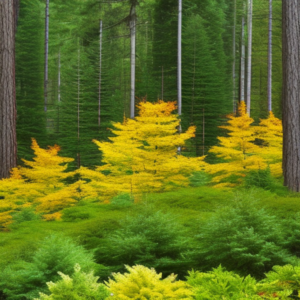
A few conifers grow fast and then do something unexpected: they drop their needles every fall like a maple drops leaves. Dawn redwood puts on 2 feet or more a year and makes a striking specimen tree, and bald cypress and larch do the same trick. If you want the details on how evergreens and conifers differ, or a deeper look at deciduous conifers, both of those are good reads. Just don’t plant one expecting year-round screening, because from November to April it will be bare.
What Speed Costs You
Fast wood is weak wood, as a rule. Trees that sprint upward build less dense trunks, drop more branches in storms, and die younger. Their roots tend to be shallow and aggressive, so keep the fastest species at least 30 feet from septic systems, foundations, and driveways. A pattern we see constantly in this business: the fast tree someone planted in the 1990s is the stump we grind out today.
The strategy that works: plant a fast grower for the next decade and a slow, strong tree (an oak, a sugar maple) for the next fifty years. When the fast one declines, the keeper is ready to take over.
Getting One in the Ground
Fall and early spring are the best planting windows in Central PA. Water deeply once a week through the first two growing seasons, since a fast top needs a root system that can keep up. Our 9-step tree planting guide walks through the whole process, and once the tree is established, regular pruning matters more for fast growers than slow ones, because weak branch angles multiply quickly.
And if a fast grower on your property has already run its course, that’s the other half of our job. Send us a photo and we’ll quote the removal of what’s left of it.















Pingback: Larch Trees: The Conifer That Drops Its Needles - StumpBusters LLC