
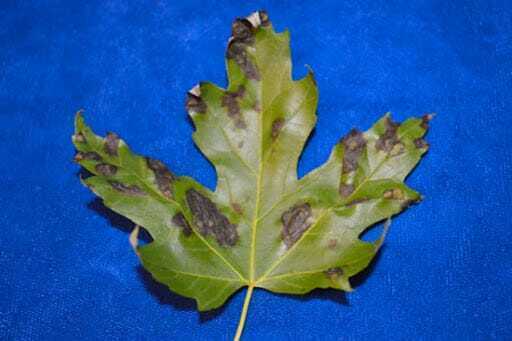
You’ve noticed spots on your tree’s leaves — maybe they’re brown, black, or surrounded by yellow halos. Should you be worried? In most cases, leaf spots are more cosmetic than dangerous. But in some situations, they signal a real problem. Here’s how to tell the difference and when you need to take action.
What Causes Leaf Spots?
The three main culprits are fungi, bacteria, and environmental stress:
- Fungal leaf spots — the most common cause. Cool, wet spring weather is especially conducive to fungal infection. Three different groups of fungi cause the majority of leaf spotting in landscape trees.
- Bacterial leaf scorch — causes brown spots often surrounded by yellow areas, plus rapid browning of young shoots. This is more serious than fungal spots and can lead to branch dieback over time.
- Algal leaf spot — caused by a parasitic alga (Cephaleuros virescens) that produces raised, fuzzy green or orange spots. More common in humid climates.
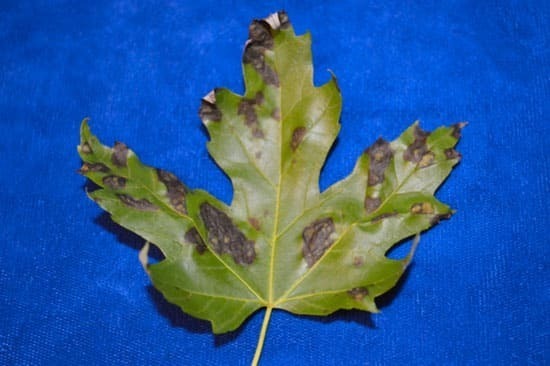
Leaf Scorch vs. Leaf Spot: Don’t Confuse Them
Sometimes what looks like a disease is actually leaf scorch — a watering issue, not an infection. Leaf scorch causes brown, crispy edges on leaves that can look similar to bacterial blight. The difference is that scorch is caused by underwatering, root damage, or extreme heat rather than a pathogen. Trees with leaf scorch can usually be treated with proper watering, fertilization, and light pruning to remove the worst-affected leaves and branches.
When Should You Worry?
Most leaf spots don’t require treatment. Mature trees tolerate them with little or no lasting damage. The later in the season that spots develop, the less concern they warrant — the tree has already done most of its growing for the year.
You should take action when:
- The tree is losing more than 25–30% of its foliage to spots and premature leaf drop
- Spots appear on the same tree year after year, getting progressively worse
- Young or recently planted trees are affected (they’re less resilient)
- You see dieback in branches, not just leaves
How Leaf Spots Spread
The organisms that cause spots survive in fallen infected leaves and twigs on the ground through winter. In spring, they produce spores that splash up onto new growth during rain. Mature spots on leaves also produce spores that spread throughout the canopy by wind and water, starting new infections on the same tree or neighboring plants.
What You Can Do
- Clean up fallen leaves in autumn to remove the overwintering fungal source
- Prune for airflow — good air circulation through the canopy helps leaves dry faster, reducing infection. See our 8 reasons to prune trees for more on this.
- Water at the base, not overhead — wet leaves invite fungal growth
- Keep your tree healthy — a well-watered, properly fertilized tree recovers from leaf spots much faster. Check our guide on what defines a healthy tree for the full picture.
If leaf spots are showing up on your Maple every year, you might also want to read about common Maple tree diseases to identify the specific fungus and treatment.
Lost a tree to disease? Contact StumpBusters LLC to get the stump removed cleanly. A rotting stump from a diseased tree can spread fungi to nearby healthy trees through underground root connections.















Pingback: TREE STUMPS : DANGER IN YOUR YARD - StumpBustersLLC
Pingback: When Should You Prune Your Apple Trees? - StumpBustersLLC